
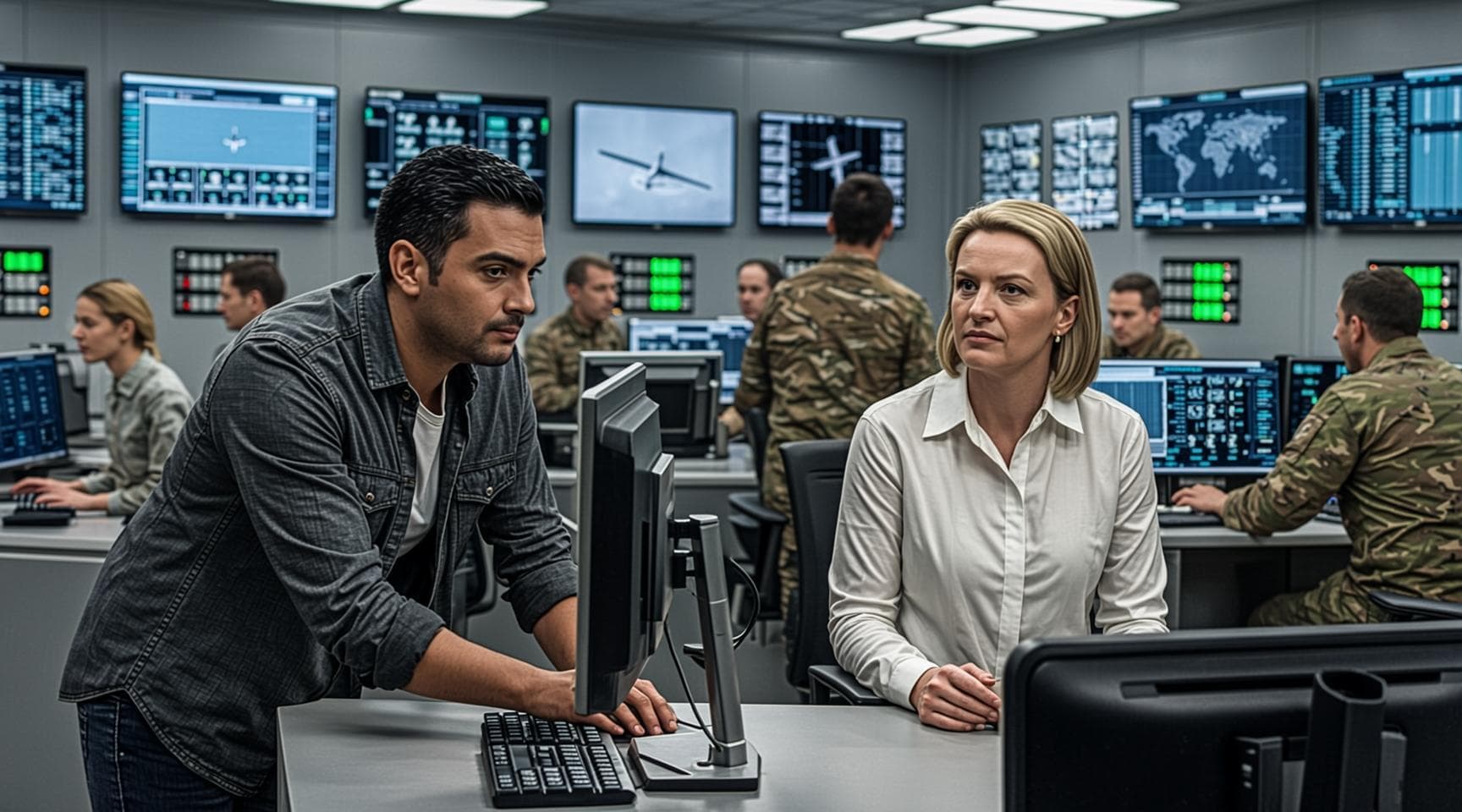
The SaaS platform announced scheduled maintenance during the operation window. The field team went dark. The intelligence stream stopped. The command center lost visibility into the operation. In defense operations, downtime isn't an inconvenience. It's a mission failure.
For defense and intelligence organizations, reliability is not about uptime percentages. It is about operational continuity. The platform must be available when the mission requires it, not when the vendor's maintenance schedule permits it. Commercial SaaS solutions are fundamentally misaligned with mission-critical requirements because they optimize for average-case scenarios, not worst-case operational necessity.
The SLA Mismatch
Commercial Service Level Agreements promise 99.9% uptime. That sounds impressive until you do the math: 99.9% uptime means 8.76 hours of downtime per year. For a commercial application, that is acceptable. For a defense operation, that is unacceptable.
But the problem goes deeper than the numbers. Commercial SLAs account for planned maintenance. They explicitly exclude scheduled downtime from their availability calculations. The vendor announces maintenance windows weeks in advance. Customers adjust their workflows. Business continues as usual.
Defense operations do not have that luxury. Missions operate on adversary timelines, not vendor schedules. A field operation cannot be paused because the SaaS platform is performing routine maintenance. An intelligence collection window cannot be shifted to accommodate a system upgrade. Operational necessity determines when systems must be available, and those requirements are not negotiable.
A NATO command center implemented a commercial collaboration platform for intelligence sharing. The platform worked well during routine operations. Then came a critical window during a deployed operation. The vendor announced a scheduled maintenance period that coincided with the expected intelligence collection window. The command center requested an exception. The vendor explained that maintenance was essential for system stability and could not be postponed. The operation proceeded with degraded capabilities. The intelligence collection was incomplete.
The platform met its SLA obligations. It failed its mission requirements.
What Mission-Critical Reliability Actually Requires
True mission-critical reliability means more than high availability percentages. It requires a fundamentally different approach to system design, deployment, and operational support.
Continuous availability is the baseline. The system must be available when the mission requires it, without planned maintenance windows that conflict with operational requirements. This does not mean zero maintenance—it means maintenance that does not require system downtime. It means redundancy architectures that allow components to be serviced without taking the system offline. It means deployment strategies that enable updates without operational interruption.
Mission-grade isolation comes next. In commercial SaaS, a noisy neighbor problem can affect performance across customers. An unexpected load spike from one customer degrades service for others. For defense operations, performance variability is unacceptable. The system must provide guaranteed resources and predictable performance regardless of external factors. Your operational requirements should not be affected by another customer's usage patterns.
Disaster recovery with operational continuity is the final requirement. Commercial platforms focus on recovery time objectives and recovery point objectives. These are important metrics, but they measure recovery from failure, not prevention of failure. Mission-critical systems require active-active architectures that can failover without interruption. They require geographic distribution that can survive regional outages. They require operational procedures that maintain continuity even during infrastructure failures.
The Commercial SaaS Architecture Versus Mission Requirements
The fundamental mismatch between commercial SaaS and mission-critical operations comes down to cost optimization versus mission assurance. Commercial platforms optimize for cost efficiency by sharing infrastructure, concentrating resources, and accepting some level of variability. These are rational business decisions that make SaaS economically viable for commercial customers. They are non-starters for mission-critical defense operations.
Multi-tenant architecture means your resources are shared with other customers. A failure in one tenant can affect performance for others. A maintenance activity for one customer requires downtime for everyone on that infrastructure. The cost savings of shared infrastructure are substantial. The operational risks are unacceptable for mission-critical workloads.
Centralized deployment means your system depends on specific data centers and network paths. A regional outage affects all customers in that region. A network disruption between your operations and the centralized infrastructure degrades or eliminates your access. The operational complexity of managing distributed infrastructure is substantial. The mission risk of single points of failure is unacceptable.
Vendor-controlled updates mean you do not control when changes occur. The vendor's testing and deployment processes become your operational constraints. A vendor's software bug becomes your mission failure. The convenience of managed updates is substantial. The loss of operational control is unacceptable for mission-critical systems.
Each of these trade-offs makes commercial SaaS economically viable and operationally efficient for commercial customers. For defense and intelligence operations, where mission failure has consequences beyond financial impact, these trade-offs are unacceptable.
The Field Operations Case Study
The reliability requirement is not theoretical. It has operational consequences that determine mission success or failure.
A defense organization deployed a field intelligence platform for forward operating teams. The initial deployment used a commercial SaaS solution because it offered rapid implementation and low upfront costs. The platform worked well during routine training and exercises. Then came a real-world operation in a remote region with limited connectivity.
The operation required continuous intelligence collection and reporting over a 72-hour window. Forty-eight hours into the operation, the commercial platform announced an emergency maintenance window due to a security vulnerability. The maintenance would require four hours of downtime. The field team was advised to suspend operations until the system was restored.
The team continued manual collection but lost the real-time analysis and rapid dissemination capabilities that the platform provided. Intelligence that could have informed immediate tactical decisions was delayed by hours. By the time the platform was restored, the operational window had closed. The mission objectives were partially achieved, but the delayed intelligence meant missed opportunities and increased risk.
After-action analysis identified the platform downtime as a contributing factor to suboptimal outcomes. The recommendation was clear: mission-critical systems must be available when the mission requires them, regardless of vendor maintenance requirements. The organization migrated to a sovereign deployment model with mission-grade reliability. The next operation achieved full operational continuity throughout the entire mission window.
Building Mission-Critical Reliability
Implementing mission-critical reliability does not mean sacrificing modern capabilities. It means choosing solutions designed from the ground up for continuous availability and operational continuity.
Sovereign deployment provides the foundation. By deploying the system on your controlled infrastructure, you eliminate dependency on vendor maintenance schedules. You control when updates occur, how they are deployed, and what operational contingencies are in place. You can schedule maintenance during mission downtime, not during critical operational windows. You can test updates in isolated environments before deploying to operational systems. You can maintain older versions as hot spares while newer versions are validated.
High-availability architecture ensures continuous operation. The system should be deployed across multiple availability zones with automatic failover. If one region experiences an outage, operations continue seamlessly from another region. The database should use active-active replication to eliminate single points of failure. The application should be stateless to allow horizontal scaling and rapid recovery from failures.
Mission-grade isolation provides predictable performance. Your resources should be dedicated to your operations, not shared with other customers. Your performance should not be affected by other customers' usage patterns. Your operational requirements should drive capacity planning, not vendor cost optimization.
Operational control ensures alignment with mission requirements. Your organization should decide when updates occur, not have them imposed by a vendor's release cycle. Your security team should validate changes before deployment, not trust that a vendor's testing process caught all issues. Your operational tempo should determine system availability, not a vendor's maintenance calendar.
The Strategic Value of Mission-Critical Reliability
Field intelligence is becoming increasingly central to defense and intelligence operations. Personnel on the ground collect observations that cannot be captured by technical intelligence systems. They see patterns that satellite imagery misses. They hear information that signals intelligence cannot capture. But the value of that intelligence depends entirely on the reliability of the systems that collect, process, and disseminate it.
A commercial SaaS platform that works 99.9% of the time is excellent for commercial collaboration. It is inadequate for mission-critical operations. The difference is not technical. It is strategic. Commercial platforms optimize for commercial requirements. Mission-critical operations require systems optimized for mission requirements.
The field teams are already collecting intelligence. They are already making observations that could inform operations. They are already encountering situations where rapid intelligence dissemination can determine mission outcomes. The question is whether the reliability of your systems enables mission success or creates mission risk.
Deploy mission-critical field intelligence with sovereign reliability. Contact sales to request a security briefing on continuous availability deployment options.